
No Public Fayette County Warrant Database
The Fayette County Sheriff Field Operations and Warrants Division page makes this point directly: the Sheriff may not release warrant information over the telephone. There is no public-facing search portal where someone can type a name and see a list of active Fayette County warrants. Other counties or cities sometimes post active warrant lists online, but Fayette County does not do this. The Sheriff's Warrants Division is part of Field Operations and focuses on locating and apprehending people with outstanding warrants for crimes committed in Lexington-Fayette County, as well as fugitives from other jurisdictions who may be found in the area.
This is an official access limitation. The Fayette County Sheriff has not published a warrant list or warrant lookup tool. Citing the absence of such a database honestly is important because unofficial third-party websites often claim to show "active warrants" pulled from Fayette County records. Those sites are not connected to the Sheriff's Warrants Division and cannot reflect what is actually in law enforcement systems. Felony warrant information is entered into NCIC (National Crime Information Center), which is a law enforcement database. Members of the public cannot access NCIC. Anyone who needs to know their warrant status must deal with it directly through the Sheriff.
The result: the only official, reliable way to check for a Fayette County warrant is the in-person visit described below.
The Fayette County Sheriff Field Operations page describes the Warrants Division role within the office's operations, including the unit's work on local and interstate fugitives.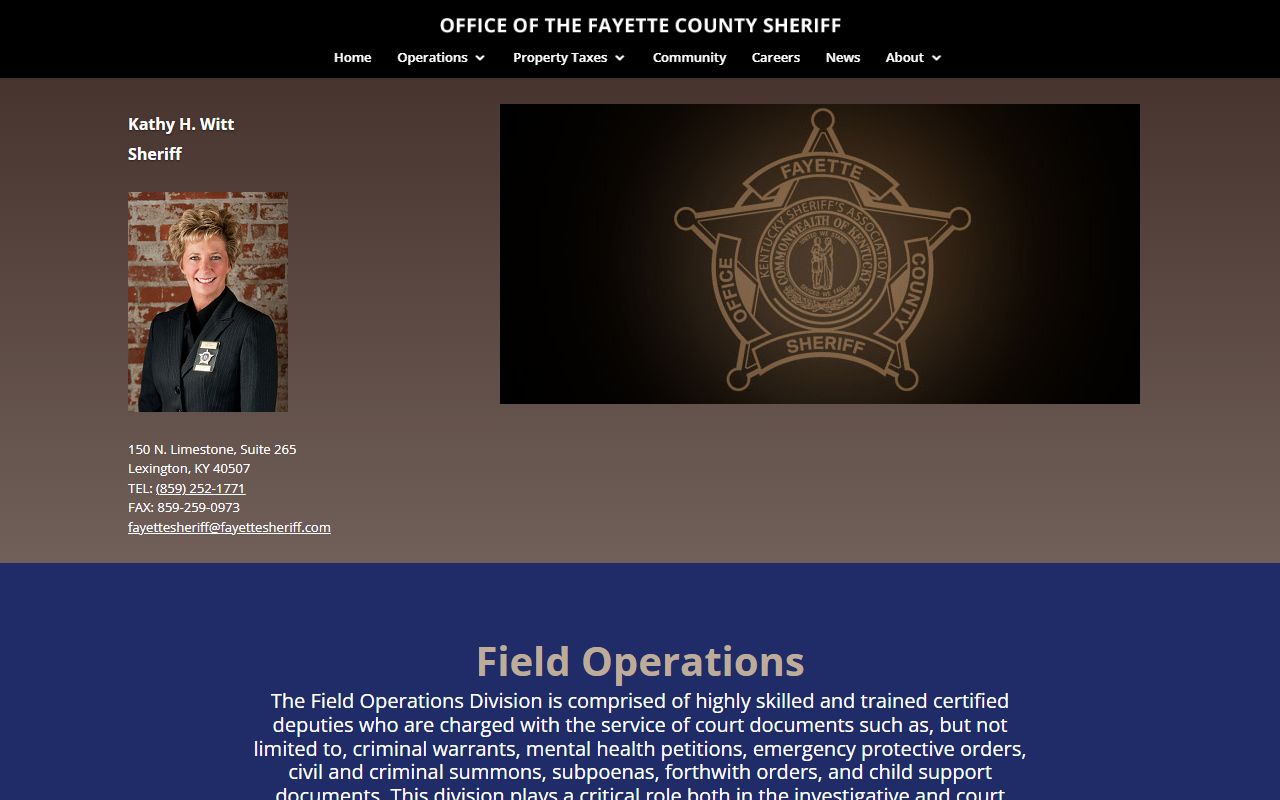
The page confirms both the scope of warrants the division handles and the policy that warrant details are not shared over the phone.
Fayette County Sheriff Warrants Division
The Warrants Division sits within the Sheriff's Field Operations bureau. It is the unit responsible for serving criminal warrants, locating people with outstanding warrants, and working fugitive cases. The division has helped apprehend fugitives from all 50 states and several U.S. territories, often using NCIC data shared among law enforcement agencies. The Sheriff also runs a Most Wanted program in partnership with local media, launched in 2011, to raise public awareness about individuals with outstanding warrants who have not yet been located.
Warrants Division
District Courthouse, Fourth Floor
150 N. Limestone Street
Lexington, KY 40507
Phone: (859) 252-1771
Fax: (859) 233-1872
To report a fugitive or provide a tip, call the Warrants Division at (859) 252-1771 or send a fax to (859) 233-1872. The Sheriff's office asks that the public not attempt to apprehend anyone on their own. All tips should go directly to the division. Reporting information this way puts the tip in the hands of trained officers rather than putting civilians at risk.
The Fayette County Sheriff Court Services Division page covers the Sheriff's courthouse security and civil process functions, which include serving summons, subpoenas, and other court documents alongside warrant-related service.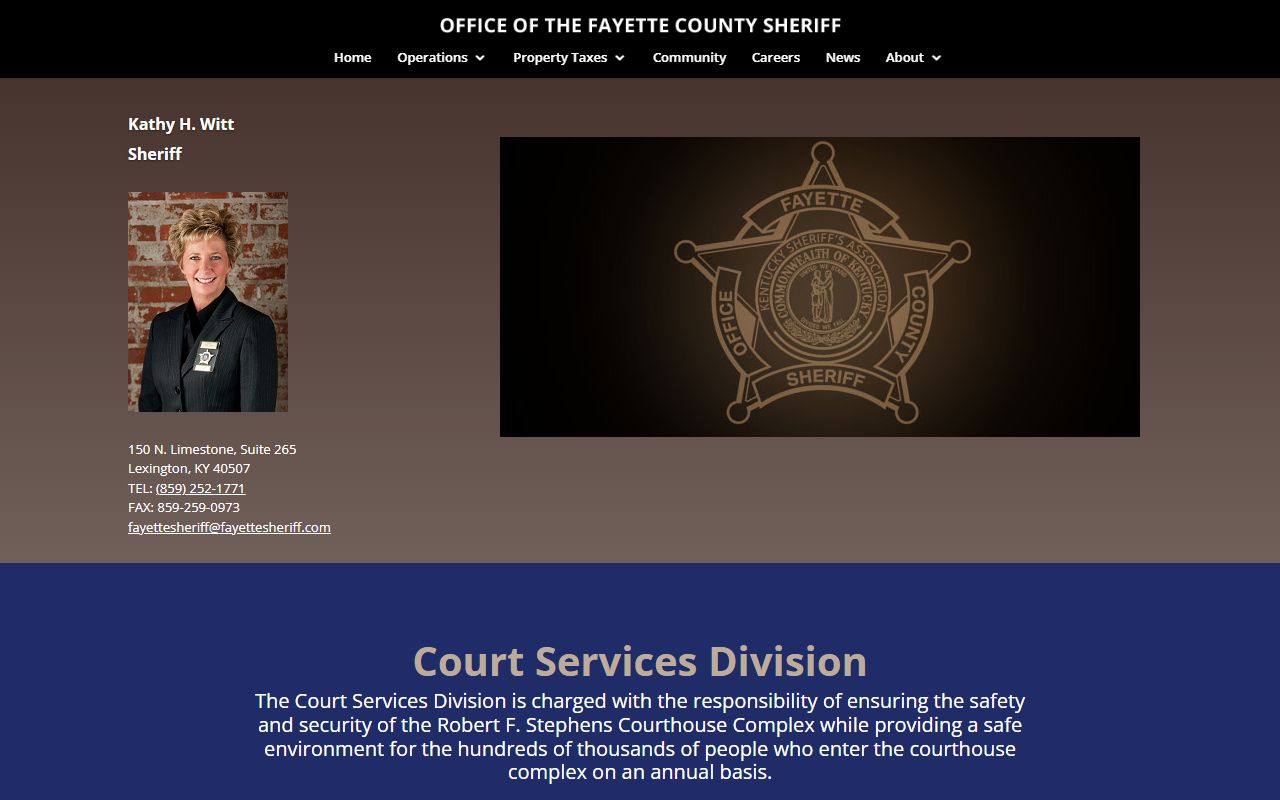
Court Services and Field Operations together make up the two main operational arms of the Fayette County Sheriff's Office that interact with the local warrant and court-document system.
Types of Fayette County Warrants
Not all warrants are the same. Fayette County courts and the Sheriff handle several distinct warrant types, each with a different trigger and a different resolution path. Knowing which type applies changes what steps make sense next.
| Warrant Type | What It Is | How It Is Resolved |
|---|---|---|
| Arrest Warrant | Issued by a judge when there is probable cause to believe a person committed a crime. Authorizes law enforcement to take the person into custody. | Surrender or apprehension, followed by booking, arraignment, and bond process at the District Criminal/Traffic Division. |
| Bench Warrant / Failure to Appear | Issued directly by a judge after a person misses a required court date or violates a court order. Common after skipped arraignments, hearings, or trials. | Contact an attorney and the relevant Circuit or District clerk division to check bond status. Appear before the court to address the missed date. |
| Probation / Parole Violation Warrant | Issued after an alleged supervision violation. A probation or parole officer files a report; the court issues the warrant to bring the person back in for a revocation hearing. | Custody, hearing before the sentencing or supervising court, potential revocation of probation or parole. |
| Forthwith Order | A court document that requires immediate service by the Sheriff's process division. It compels a person to appear or act at once. | Served by the Sheriff's process division; compliance with the order's terms. |
| Emergency Protective Order / Interpersonal Protective Order (EPO/IPO) | Civil protection orders, not criminal warrants. Courts accept EPO and IPO petitions 24 hours a day through the District Criminal/Traffic and Domestic Violence processes. Violations can lead to criminal charges. | EPO petitions go through the District Courthouse Domestic Violence Division; after-hours petitions are routed to Room D-157. |
| Warrant for Possession (Eviction) | An eviction enforcement document. After a court issues a judgment in a forcible detainer case, the landlord may request the warrant to remove the tenant. | Request through District Civil at (859) 246-4150 between the 8th and 30th day after the eviction judgment. The caller must provide the court date on the judgment, the case number, the defendant's name, and the defendant's address, then arrange for the Sheriff or a constable to conduct the removal. |
Note: EPOs and IPOs are civil protection orders rather than criminal warrants, but violations of them can generate criminal charges and lead to arrest warrants.
How to Check for a Warrant on Yourself
Because the Fayette County Sheriff does not provide warrant information by phone and does not post an active warrant list online, the in-person self-check is the only official route. The process requires going to the Warrants Division at the District Courthouse and asking in person. Bring a valid government-issued photo ID. If you have any court paperwork related to the matter, bring that too: a case number, the name of the charge, and the court date all help the division pull up the right file faster.
- Do not rely on unofficial warrant sites. Third-party websites that claim to show active Fayette County warrants are not connected to the Sheriff's Warrants Division. Their data may be outdated, incomplete, or wrong. Only the Sheriff knows what warrants are currently active in their system.
- Go in person to the Warrants Division. The office is on the fourth floor of the District Courthouse at 150 N. Limestone Street, Lexington, KY 40507. Bring a government-issued photo ID.
- Bring any related court documents. If you received a summons, a notice, or any paperwork connected to a case, carry it with you. Case numbers and charge details speed up the check.
- If a warrant exists, do not leave the building without a plan. Talk to an attorney if you can. An attorney can sometimes help arrange a surrender on a specific date or negotiate bond terms before you appear in custody.
- If a bench warrant stems from a missed court date, contact the relevant clerk division: the Circuit Court Clerk for felony or civil matters, or the District Court Criminal/Traffic Division for misdemeanors and traffic cases. Ask whether bond has been set and what the next court date is.
- If bond is authorized, the District Criminal/Traffic Division at 150 N. Limestone, first floor, posts bail bonds 24 hours a day, seven days a week. The only days it is closed are December 24 and 25. Call ahead to confirm bond type and amount before going.
- If reporting a fugitive, call the Warrants Division at (859) 252-1771 or fax (859) 233-1872. Do not try to apprehend the person yourself.
If the warrant relates to a criminal matter, understanding the underlying charges can help you and your attorney decide how to proceed. Court records for the case may be available through the Fayette Circuit Court Clerk.
Warning: Avoid Unofficial Warrant Search Sites. Many websites claim to provide free active warrant searches for Fayette County. None of these sites are operated by or connected to the Fayette County Sheriff's Office. They may show outdated records, charge fees for inaccurate information, or simply scrape old news and arrest data. The Fayette County Sheriff does not share its active warrant list with any private data company. For an accurate, current warrant check, the only source is the Sheriff Warrants Division at the District Courthouse, fourth floor, 150 N. Limestone Street.
This warning matters because acting on wrong information from an unofficial site can cause real harm. A person might believe a warrant has been cleared when it has not, or think a warrant exists when it does not. Either mistake can lead to unexpected arrests, missed legal deadlines, or wasted legal fees. The safest path is always to go directly to the source.
Bench Warrants and Failure to Appear in Fayette County
A bench warrant is one of the most common warrant types in any county, and Fayette is no exception. When someone misses a scheduled court date, the judge can issue a bench warrant on the spot. This can happen in any court. District Court issues bench warrants for missed traffic hearings, misdemeanor arraignments, and small claims dates. Circuit Court issues them for missed felony hearings, civil motion dates, or family court appearances. Family Court issues them in custody and support matters when a party does not show.
A bench warrant stays active until the person appears before the court that issued it or is taken into custody. It does not expire on its own. Law enforcement officers who encounter the person during any routine contact, such as a traffic stop, can and will execute the warrant. The person will then be taken into custody and held until a bond hearing or until the original court date is reset. In Fayette County, the relevant clerk division for each court type is the starting point for resolving a bench warrant:
- Felony bench warrant: contact the Fayette Circuit Court Clerk, Circuit Criminal Division.
- Misdemeanor or traffic bench warrant: contact the District Criminal/Traffic Division at 150 N. Limestone, first floor.
- Family court bench warrant: contact the Family Court clerk division at the Robert F. Stephens Circuit Courthouse.
- Civil bench warrant: contact the Circuit Civil Division or District Civil Division depending on the case level.
Getting legal advice before attempting to resolve a bench warrant voluntarily is worth the time. An attorney can sometimes contact the court in advance, arrange a surrender date, and reduce the chance of being held without bond until the next available docket.
Fugitive Extradition and NCIC
The Fayette County Sheriff's Fugitive Extradition Division handles cases where individuals wanted by Kentucky law enforcement are apprehended in another state. When another state's law enforcement arrests someone with an active Kentucky warrant, the Extradition Division may travel to that state to transport the person back to Fayette County to face judicial process. The division has completed extraditions from all 50 states and several U.S. territories.
Felony warrant information is entered into NCIC, the National Crime Information Center. NCIC is a secure, law enforcement-only database. This means a felony warrant issued in Fayette County can be seen and acted on by any officer anywhere in the country during a routine check. A person with a Fayette felony warrant who is stopped in another state, at an airport, or during any law enforcement contact is at risk of immediate arrest and extradition back to Kentucky. There is no grace period and no geographic limit on felony warrants once they are in NCIC.
Misdemeanor and lesser warrants may or may not be entered into NCIC depending on the case. But any active warrant, regardless of level, remains a legal obligation that does not go away on its own.
The Fayette County Sheriff Domestic Violence and Victim Services Division page explains the Sheriff's role in serving emergency protective orders and providing support to victims who go through the EPO process.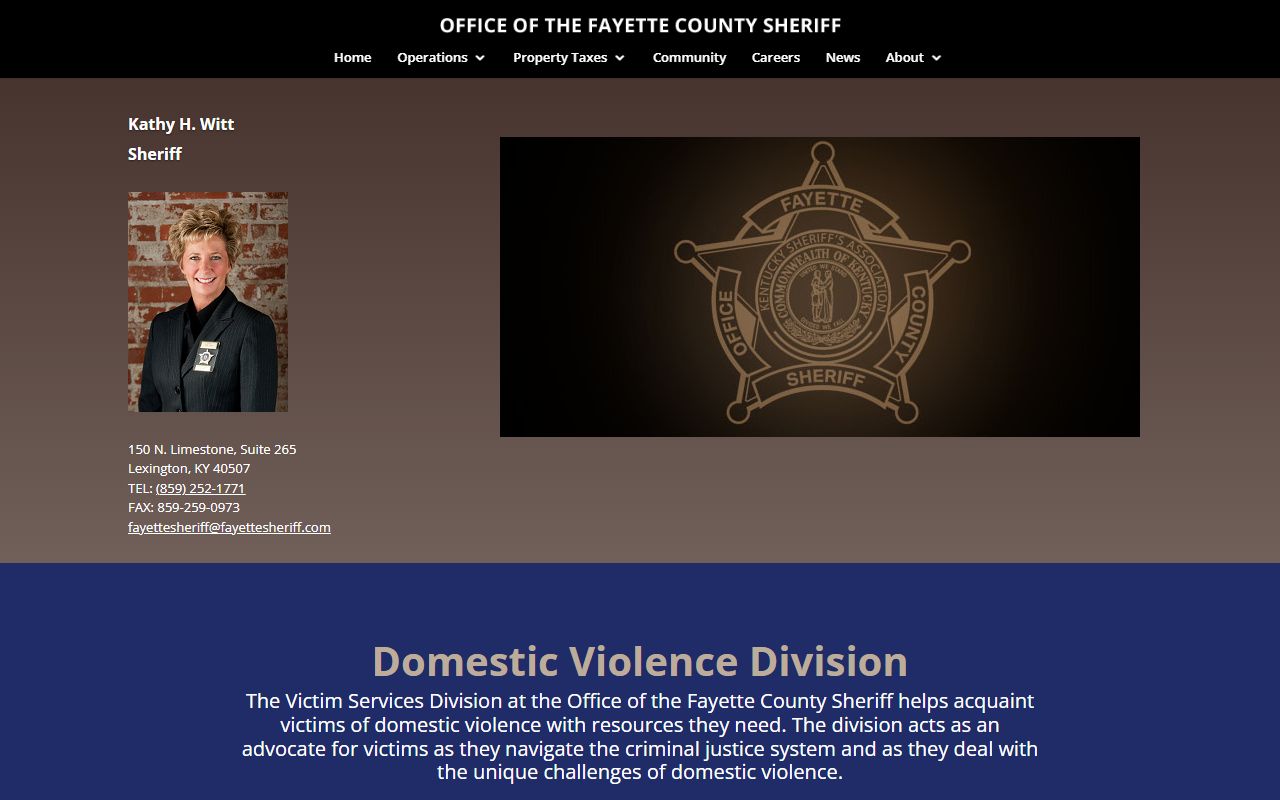
The Victim Services Division, which includes Amanda's Center, works alongside the warrant and process functions of Field Operations to support people involved in domestic violence matters from the point of EPO filing through recovery planning.
Warrant for Possession and Eviction Enforcement
A warrant for possession is not a criminal warrant. It is a civil enforcement tool used at the end of a forcible detainer (eviction) case. After Fayette District Court rules in favor of a landlord and issues an eviction judgment, the judgment does not automatically move the tenant out. The landlord must take a separate step to request enforcement by the Sheriff or a constable.
The process works like this. The landlord calls the District Civil Division at (859) 246-4150. The call must happen between the 8th and 30th day after the eviction judgment. The landlord must have four pieces of information ready: the court date on the judgment, the case number, the defendant's full name, and the defendant's current address. After the District Civil Division processes the request, the landlord then contacts the Fayette County Sheriff or a licensed constable to schedule the physical removal.
Tenants facing eviction enforcement should understand that the warrant for possession means law enforcement may arrive to carry out the removal. If the eviction judgment itself is being appealed or if there is a stay in place, that information must be communicated to the court and the Sheriff before the warrant is executed. Waiting until the day of removal is too late. For help understanding the eviction process, the Fayette County Legal Help Center at the District Courthouse offers free self-help resources for civil cases.
Posting Bond on Fayette County Warrants
When a warrant leads to custody, the next step is often a bond hearing. In Fayette County, bond for District Court cases is handled by the District Criminal/Traffic Division on the first floor of 150 N. Limestone Street. This division posts bail bonds 24 hours a day, seven days a week. It is closed only on December 24 and 25. The around-the-clock schedule means someone booked late at night on a warrant does not have to wait until morning to begin the bond process.
Bond amounts vary by charge level and individual circumstances. A judge sets the bond at arraignment or a bond hearing. Common bond types in Kentucky include cash bond, surety bond through a licensed bail bondsman, and release on own recognizance for lower-level matters. Before going to the courthouse to post bond, call the jail or the clerk division to confirm the bond type and exact amount. Bond terms can change between the time a warrant is issued and the time the person appears in custody, so it is worth confirming before making the trip.
People already booked and in custody can be searched through the Fayette County inmate records portal at jail.lexingtonky.gov, where bond status and current charges are listed. For charge detail and case history beyond what the jail roster shows, the Circuit Court Clerk's records are the authoritative source.
Note: Bond amounts shown on jail roster entries reflect what was set at the time of booking and may change after a subsequent court hearing.
Emergency Protective Orders and Victim Services
Emergency protective orders and interpersonal protective orders are civil protection tools, but they intersect heavily with the warrant system. Once an EPO is in place, a violation of its terms becomes a criminal act that can generate an arrest warrant. EPO and IPO petitions are accepted 24 hours a day through the District Criminal/Traffic and Domestic Violence processes at the District Courthouse. After hours, petitions are routed to Room D-157.
The Fayette County Sheriff's Victim Services Division helps people who have filed an EPO. Advocates in the division provide crisis assessment, help develop a safety plan, may arrange a safe ride to a court hearing, and assist with long-term recovery planning. Amanda's Center is part of this division. The service is available at no cost to victims. For someone who has obtained an EPO and then learns the other party has violated it, calling the Sheriff's office to report the violation is the right first step. A violation report can lead to the issuance of an arrest warrant for the violating party.
The Lexington Police open records page explains how to request records from the Lexington Division of Police, including reports that may relate to incidents involving protective orders or warrant activity.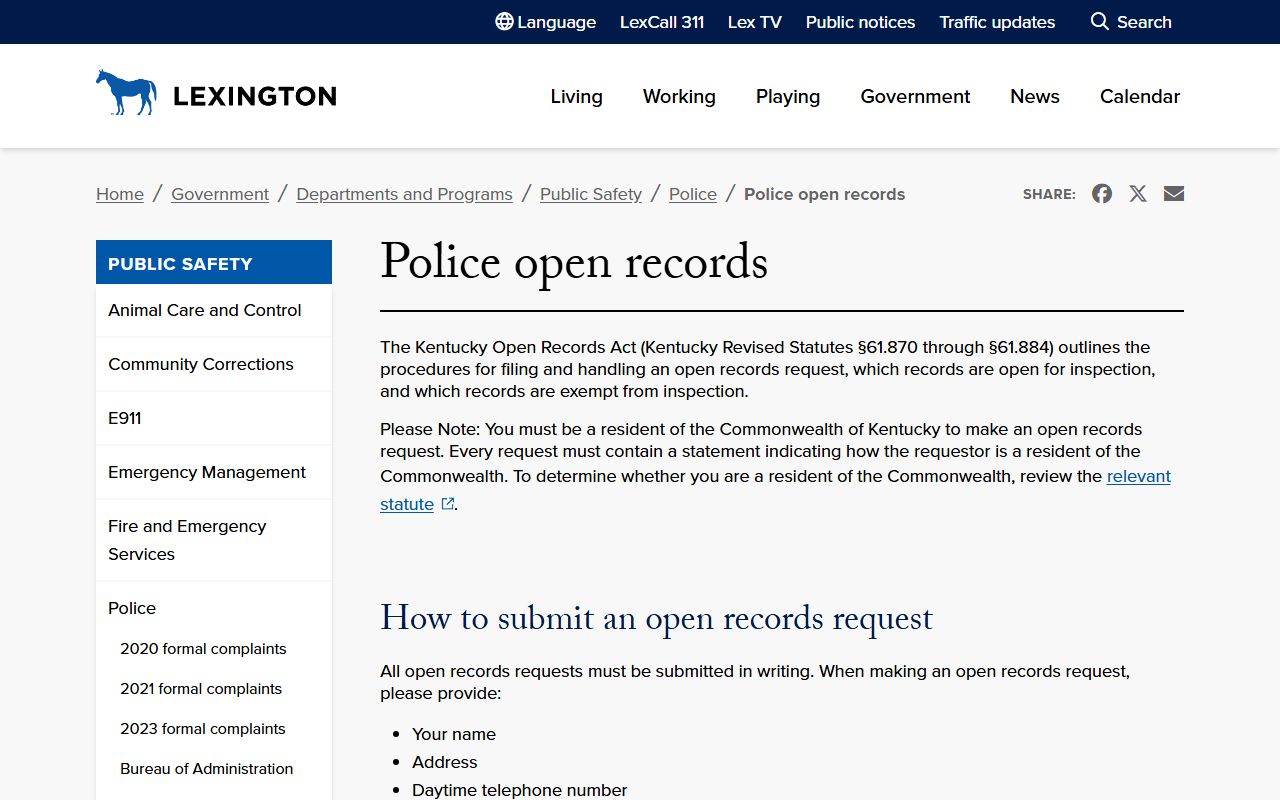
Police open-records requests are separate from court records requests. Incident reports involving warrants or protective orders come from the police, while case files and court orders come from the Circuit Court Clerk.
Crime Stoppers and Reporting Warrant Subjects
Anyone with information about the location of a person with an outstanding Fayette County warrant can report it through the Warrants Division directly or through Crime Stoppers. Crime Stoppers allows anonymous tips. The Fayette County Sheriff's Most Wanted program, run in partnership with local media since 2011, highlights individuals with active warrants to generate community tips. The official channel for warrant tips remains the Sheriff's Warrants Division at (859) 252-1771.
When calling to report a fugitive, the Sheriff's office asks that callers provide as much detail as possible: the person's name, a physical description, the last known location, and any vehicle information. Anonymous callers should note they are calling anonymously so the division can route the tip appropriately. Tips that lead to an apprehension may qualify for a Crime Stoppers reward, depending on the program's current terms. Do not approach, follow, or confront anyone you believe has a warrant. Let the Warrants Division handle all physical enforcement.
The Lexington Police phone directory lists contact numbers for police divisions throughout Lexington-Fayette Urban County Government, useful if a warrant-related matter also involves a Lexington Police report or investigation.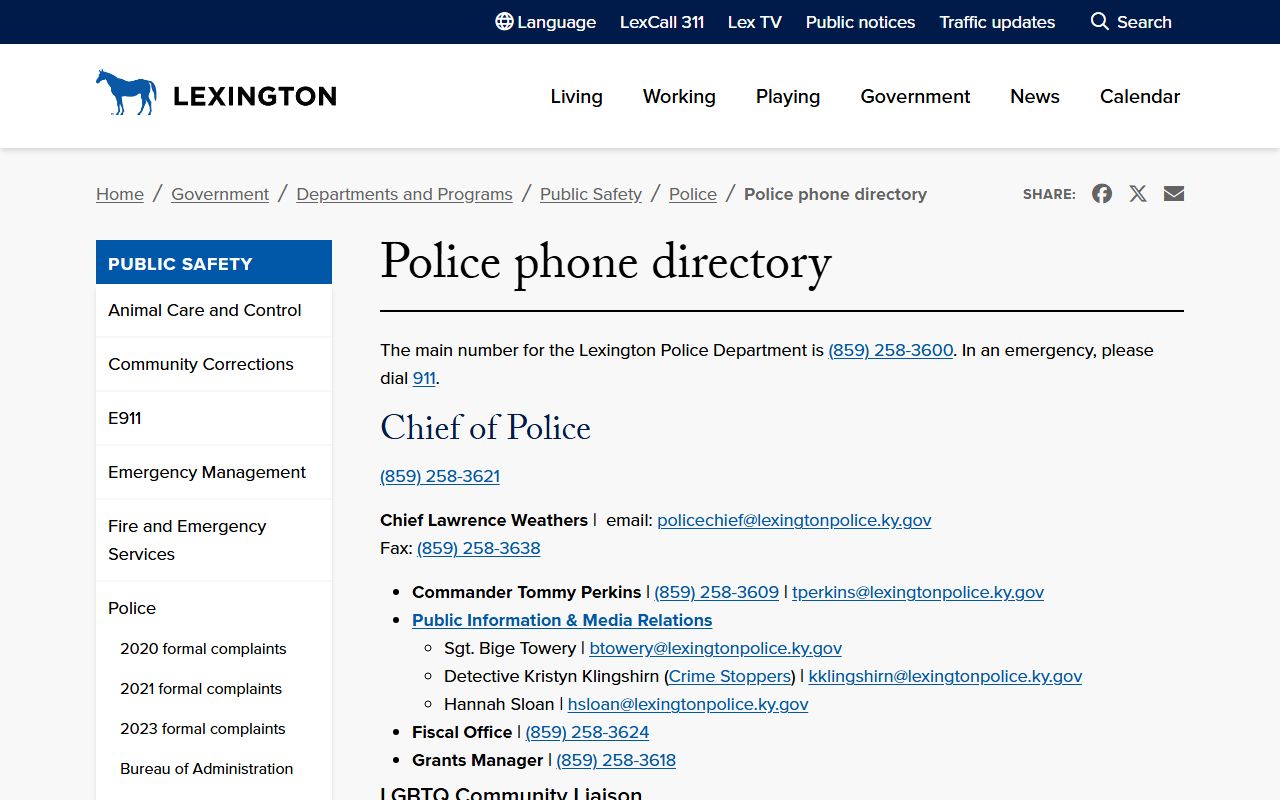
For matters that involve both the Sheriff's Warrants Division and the Lexington Police Department, the phone directory helps identify the right contact point within each agency.
Accessing Warrant and Underlying Case Records
Because the Sheriff does not publish an active warrant list, there is no public warrant-record field inventory to display here. That is an official limitation of how Fayette County handles this information, not a gap in research. What does exist in the court system is the underlying case file tied to the charge that triggered the warrant. Those records are kept by the Fayette Circuit Court Clerk. A case file may include the arrest citation, the warrant itself if it has been executed, the bond order, and all subsequent docket entries. The case file is generally available to the public for review at the Circuit Appeals and Records Division, 120 N. Limestone, Suite C-33.
For executed warrants where a person has already been booked into the Fayette County Detention Center, the inmate records portal at jail.lexingtonky.gov shows current charge information and bond status. That portal is updated in near real time for active bookings. It is not a warrant database, but it shows whether someone is currently in custody on a given charge.
- Warrant
- A court order authorizing law enforcement to arrest a person, search a location, or carry out another specific act. A warrant has been signed by a judge or magistrate.
- Bench Warrant
- A specific type of warrant issued by a judge ("from the bench") when a party fails to appear for a required court date or violates a direct court order.
- NCIC
- National Crime Information Center. A secure federal law enforcement database that contains felony warrant information and can be accessed by any law enforcement agency in the country.
- Bond / Bail
- Money or property pledged to the court to secure release from custody before a case is resolved. Forfeited if the person fails to appear.
- Forthwith Order
- A court document requiring immediate action or appearance. Served by the Sheriff's process division rather than through an arrest.